
Eight years ago, Trump’s first NSS said that “China and Russia challenge American power, influence, and interests, attempting to erode American security and prosperity.” The new NSS doesn’t name Russia as a threat to the U.S. – stating instead that “strategic stability with Russia” is a goal of American policy. Europe is presented as a bigger challenge; the U.S. should “help Europe correct its current trajectory,” which the NSS says has been damaged by immigration and a risk of “civilizational erasure.”
As for China, the document focuses on economic competition – trade, infrastructure, and technology. References to Taiwan and the South China Sea come later, and they include warnings that other Asian nations must carry a greater burden; “the American military cannot, and should not have to, do this alone.”
“The north star of great-power competition with China and Russia—around which the first Trump administration built bipartisan consensus—is gone,” Rebecca Lissner, Senior Fellow for U.S. foreign policy at the Council on Foreign Relations, wrote of the new NSS. The objective now, she said, is a “mutually advantageous economic relationship with Beijing.”
Not surprisingly, European leaders were furious about the pivot to a more Russia-friendly posture, and what the European Council President called “political interference” in the affairs of Europe.
Glenn Corn, a former CIA Senior Executive, called the document’s treatment of Europe a “shock.”
“Europeans are not the enemy,” Corn told The Cipher Brief. “And I doubt the Russians will stand side by side with us on the battlefield and support us the way that our European partners have done.”
The new NSS won praise from at least one global capital. Kremlin spokesman Dmitry Peskov said its emphasis on restoring strategic stability with Moscow “correspond in many ways” to Russia’s own vision.
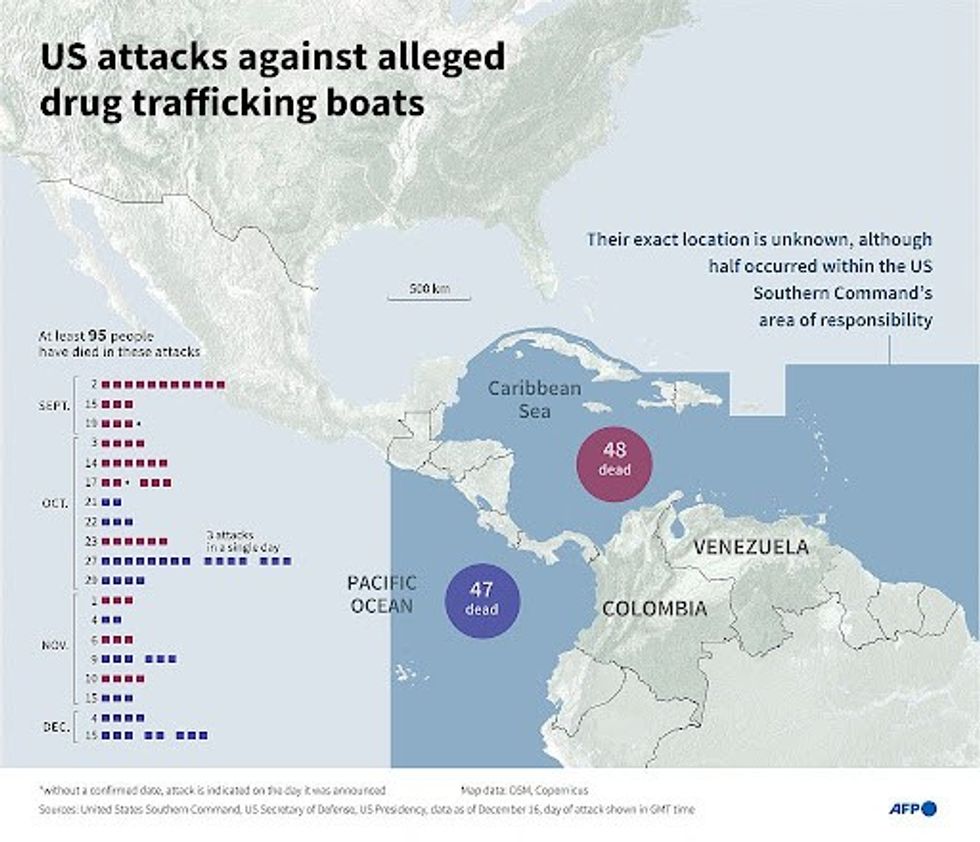
Infographic with a map of the Americas showing the areas where the United States has carried out attacks against alleged drug trafficking boats in the Caribbean Sea and the Pacific Ocean since September 2, 2025, as well as the number of people killed in these attacks, as of December 16 (Graphic by AFP via Getty Images)
Missiles on the Water
While the focus on narcotrafficking was clear from the early days of Trump’s second term, the heavy U.S. military deployments and air strikes in the Caribbean took experts by surprise. The aerial campaign began with a September missile attack on a small boat that killed 11 people; a second strike that day took the lives of two survivors who were clinging to the upturned vessel. The follow-on strike sparked criticism in Congress – including from Republicans – and charges that it might have violated maritime laws.
As of mid-December, at least 25 strikes had followed, including some in the Pacific, resulting in the deaths of more than 90 people alleged to have been smuggling drugs on the water. The Trump administration justified the attacks as necessary to stem a flow of fentanyl – which Trump labeled “a weapon of mass destruction” that has killed tens of thousands of Americans. Legal experts questioned whether passengers in these boats — even if they were found to have been carrying narcotics — could be considered enemy combatants. Others noted that fentanyl and its precursors are sourced primarily from China and Mexico — not Venezuela.
A separate question loomed, as the year wound down: were the strikes a prelude to military action against Venezuela, and its president, Nicolas Maduro?
Beyond the U.S. military buildup, there were several signs in December that a move against Venezuela may be in the offing: reports that the U.S. was exploring “day-after” scenarios in the event of Maduro’s ouster; the seizure of a Venezuelan tanker that was said to be transporting sanctioned oil to Iran; and President Trump’s December 16 announcement of a naval blockade of sanctioned oil tankers from Venezuela.
“Maduro has become the epicenter for a range of activities the U.S. is determined to roll back,” Ambassador Patrick Duddy, Former U.S. Ambassador to Venezuela, told The Cipher Brief. “Seizure of the oil tanker signals that the U.S. has decided to take more active measures to achieve its goals.
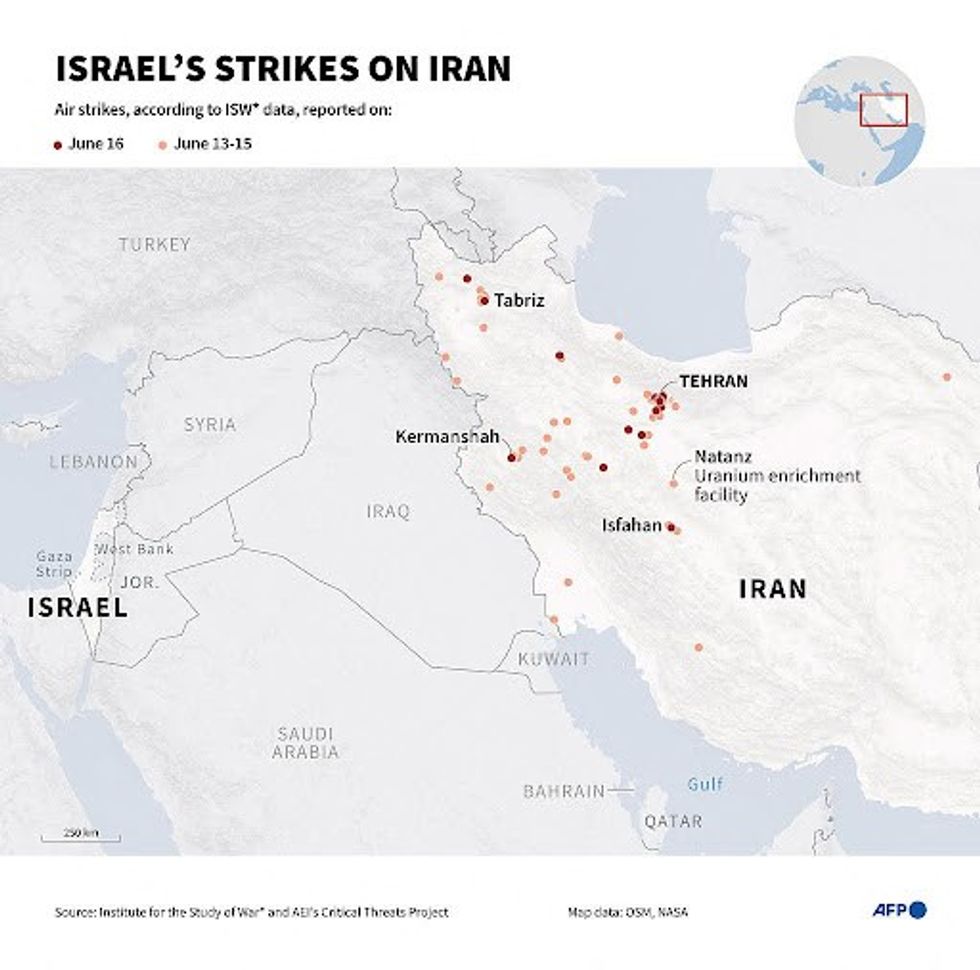
Infographic with a map showing the location of strikes carried by Israel against Iran since June 13, 2025, according to data reported by the ISW (Graphic by AFP) (Graphic by VALENTINA BRESCHI,SYLVIE HUSSON,OLIVIA BUGAULT/AFP via Getty Images)
The U.S. and Israel Attack Iran
It would have been unthinkable only two years ago: a U.S.-Israeli war against Iran that provoked almost no meaningful response.
The attacks came in June – Israeli strikes on Iran’s nuclear sites and military infrastructure that were followed by American airstrikes on three nuclear installations. Iran fired missiles at a U.S. base in Qatar but its overall retaliation was minimal, a consequence of earlier Israeli campaigns that weakened Iranian air defenses and its various militias in the Middle East. The 12-day war damaged elements of Iran’s nuclear program and laid bare a tectonic shift in the region: Iran and its “axis of resistance” had been badly weakened.
For decades, war-gaming scenarios had warned that any attack against Iran would carry risks of a conflagration, given the likelihood of a coordinated response from Iran, Hezbollah, Hamas and the Houthi militia in Yemen. Now the paradigm has shifted.
“The U.S. joined Israel in military operations and people thought that had been a red line in the past,” Norman Roule, a former National Intelligence Manager for Iran at ODNI, told The Cipher Brief. “For the nuclear negotiations and other talks going forward, Iran now has to deal with a new world where there is this precedent.”
As the year ended, Iran remained a shell of what it had been, and reports suggested its leaders were conflicted about the way forward. Would the country recognize its weaknesses and move towards a rapprochement with the West — a move that might bring sanctions relief and usher in a new security dynamic in the region? Or would hardliners carry the day, resorting to one of the last levers Iran has – its nuclear program?
“If you’re in Iran, you have to make a strategic decision,” Roule said. “‘If we restart the program, will the United States and Israel attack?’ They’ve got to ask, ‘If we do this, will we survive?’”
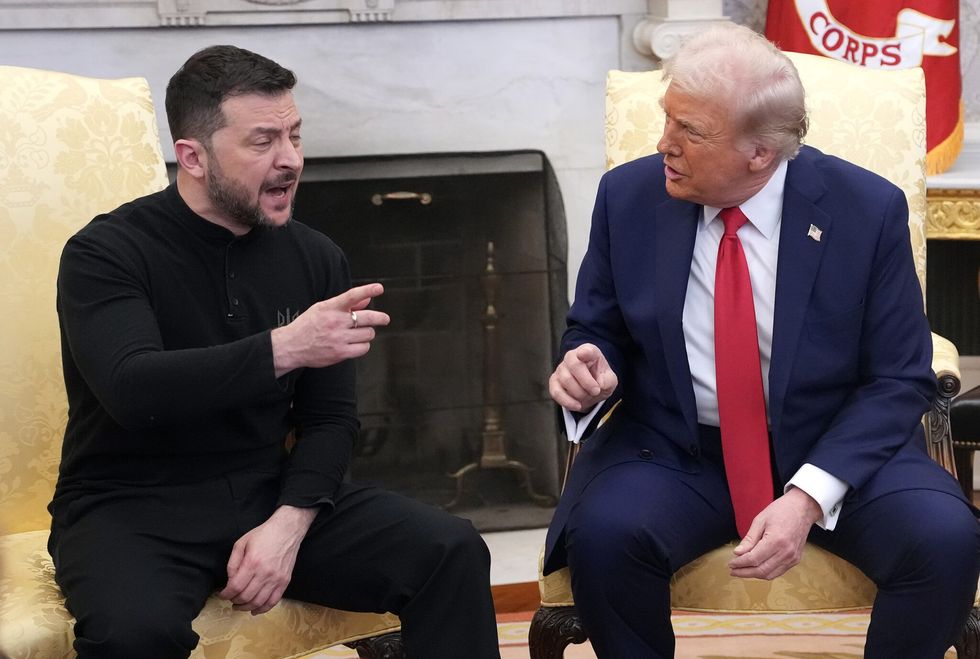
U.S. President Donald Trump and Ukrainian President Volodymyr Zelensky meet in the Oval Office at the White House on February 28, 2025 in Washington, DC. (Photo by Andrew Harnik/Getty Images)
Zelensky’s Oval Office Blowup – and the Rollercoaster that Followed
For Ukraine’s President Volodymyr Zelensky, 2025 brought wild swings of fortune, on the battlefield and in the global halls of power.
An Oval Office meeting on February 28 marked the low point – the encounter during which President Trump and Vice President JD Vance berated Zelensky for what they saw as insufficient gratitude towards the U.S. and – in Trump’s words – a failure to understand that Ukraine “has no cards” in the war against Russia.
The meeting “was a horrible disappointment and almost a shock to the system,” former NATO Supreme Allied Commander General Philip Breedlove told us that day. “There was only one winner…and that is Vladimir Putin.”
But fortune’s wheel took turns in Zelensky’s favor. Trump’s subsequent meetings with Zelensky – at the Vatican in April and the June NATO summit – warmed the relationship; the NATO summit itself saw Trump pivot back toward the alliance and its support for Ukraine; and then – in a startling outburst – Trump in July turned his ire towards Russian President Vladimir Putin. “We get a lot of bull**** thrown at us by Putin,” Trump said.
Alas for Zelensky, at year’s end the pendulum looked to have swung back once more. Trump’s envoys were again pushing Russia-friendly peace proposals, which included the surrender of territory beyond what Russia has already occupied. In an interview with Politico, Trump said of Zelensky, “He’s gonna have to get on the ball and start accepting things…cause he’s losing.” It sounded like a gentler version of the treatment Zelensky had gotten on that February day in the Oval Office.
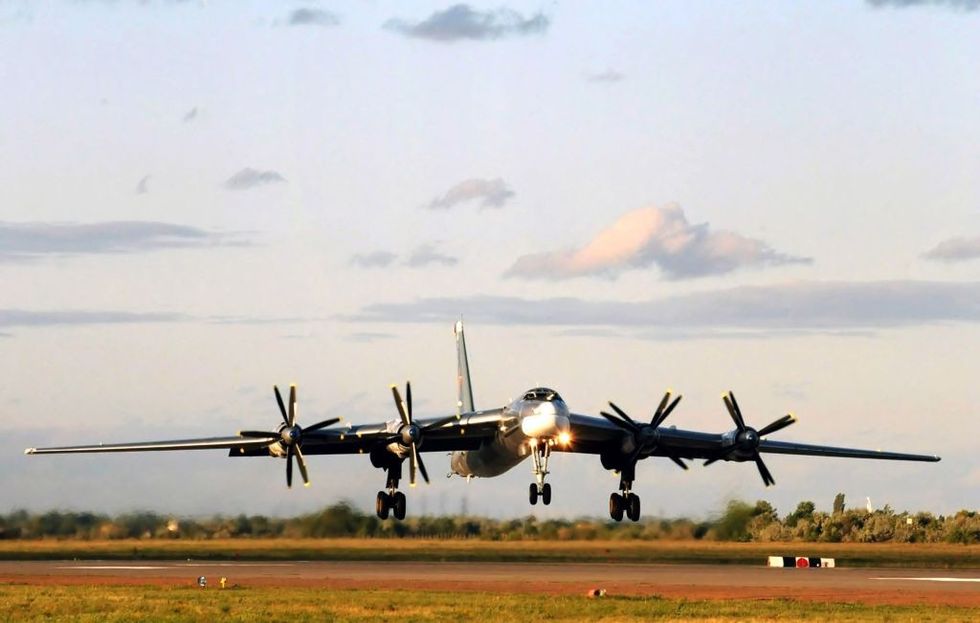 Photo by Wojtek Laski/Getty Images
A Tu-95 bomber aircraft takes off for a night patrol flies out of Engels-2 airbase on August 7, 2008 in Engels, Russia. (Photo by Wojtek Laski/Getty Images)
Operation “Spiderweb” – and What Came After
It was Ukraine’s greatest military success in 2025 – and it happened far from Ukrainian territory. An operation dubbed “Spiderweb” smuggled 117 drone weapons into Russia and unleashed them against several airfields on June 1, damaging or destroying dozens of Russian warplanes. The mission was months in the planning, the drones were smuggled on prefabricated cabins disguised as hunting lodges, and unsuspecting Russians were paid to drive the trucks that moved the cabins.
“Spiderweb” showcased Ukraine’s special operations capabilities and was followed by more long-range sabotage. As The Cipher Brief reported, subsequent attacks targeted Russian refineries and other sites tied to the oil sector.
“It’s very impressive,” Balazs Jarabik, a former European Union diplomat and analyst for RPolitik, told The Cipher Brief. The energy-sector attacks, he said, were “making the Russian war effort more expensive, and creating shortages so the Russian people feel the pain of the war.”
By year’s end, Ukraine had carried out an estimated 160 strikes on Russia’s oil sector – the campaign reached as far as the Siberian city of Tyumen, some 1200 miles east of Moscow, and included strikes against vessels alleged to be working in Russia’s so-called “shadow fleet” of tankers carrying sanctioned oil.
“Ukraine’s theory of victory now includes destroying Russia’s energy sector,” Lt. Gen. Ben Hodges, a former commander of U.S. Army Forces in Europe, told The Cipher Brief. “They’ve developed capabilities that can reach great distances with precision, exposing Russia’s vulnerability – its inability to protect critical infrastructure across its vast landscape.”
Need a daily dose of reality on national and global security issues? Subscriber to The Cipher Brief’s Nightcap newsletter, delivering expert insights on today’s events – right to your inbox. Sign up for free today.
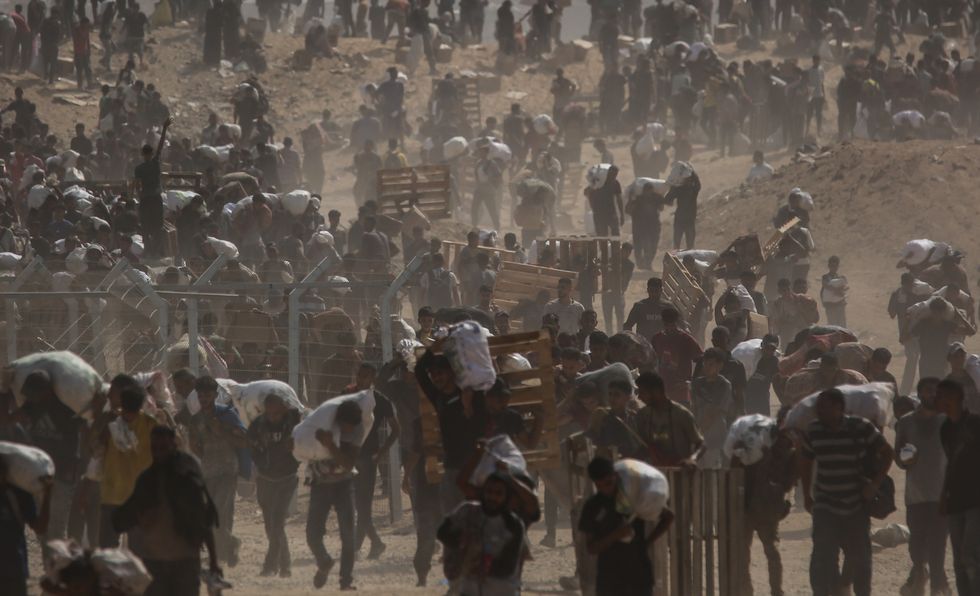
Palestinians flock to the Netzarim Corridor to receive limited food supplies as hunger deepens across Gaza amid ongoing Israeli attacks and blockade, on August 4, 2025. (Photo by Hassan Jedi/Anadolu via Getty Images)
A Peace Deal for Gaza
It was President Trump’s signature diplomatic achievement: a truce in Gaza reached just days before the two-year anniversary of Hamas’ October 7, 2023 massacre.
The deal’s first phase took hold, albeit in violent fits and starts – the return of hostages, the freeing of Palestinian prisoners in Israeli jails, and a fresh flow of international aid for Gaza. But that may have been the easy part. As the year drew to a close, there were sporadic breaks in the ceasefire, and the fate of the deal’s next phases remained unclear.
The Trump administration’s plan for Gaza included the deployment of an international stabilization force and creation of an international “Board of Peace” (led by Trump himself) to oversee the implementation of the next phases – the transition of governance to Palestinians not affiliated with Hamas, and the beginning of a multi-billion-dollar reconstruction. The deal also included language offering a conditional pathway to Palestinian autonomy over its territories.
But as of mid-December, the announcement of the Board had been delayed, and the New York Times reported that while the U.S. was pressing other nations to contribute troops to a 8,000-member force for Gaza, it had yet to win any commitments. Countries were said to be worried their troops might be ensnared in fresh fighting; and the UN Security Council resolution to deploy the force gave no precise terms of engagement. Nor was there agreement on the makeup of a transitional government.
As these hurdles appeared, reports suggested Hamas was rebuilding its presence in the territory.
“Who’s really calling the shots there?” Ralph Goff, a former CIA Senior Executive, asked at The Cipher Brief’s annual Threat Conference, speaking of the uncertainty inside Gaza. “I remain pretty pessimistic on the idea of any kind of internal governing force being able to compete with Hamas at this point.”
By year’s end, two things were clear: the Gaza ceasefire itself was a welcome achievement after two years of carnage; and uncertainty hung over the truce’s critical next phases. This was one major story that will continue to unfold — with hope but also apprehension — well into 2026.

The commissioning and flag-presenting ceremony of the Fujian, China’s first aircraft carrier equipped with electromagnetic catapults, is held at a naval port in Sanya City, south China’s Hainan Province, on Nov. 5, 2025. (Photo by Li Gang/Xinhua via Getty Images)
China’s Military Boom
China held a “Victory Day” parade in September – its way of marking 80 years since the end of World War II – and it was above all a show of military prowess. 12,000 troops marched alongside an arsenal of newly-minted battle tanks and rocket launchers, drone weapons and hypersonic missiles, and more. It was a fitting symbol for a year in which China turbocharged its military buildup.
As The Cipher Brief reported, China took a “leap forward” in drone weaponry in 2025: a huge new “stealth endurance drone,” mosquito-sized “micro drones,” and the deployment of a new “drone mothership.” The latter, known as the Jiu Tian, was billed as the world’s largest drone carrier – an 11-ton aircraft that is itself an uncrewed aerial vehicle. According to the South China Morning Post, the Jiu Tian can hold 100 smaller UAVs and carry them more than 4,000 miles.
“They have the production, they have large inventory and now they also have the AI,” Dr. Michael Raska, a professor at the Military Transformation Programme at the S. Rajaratnam School of International Studies, told The Cipher Brief. “With all these combined, they have been experiencing a leap forward in the quality and quantity of all their drones.”
China also made leaps in maritime power. In November, the People’s Liberation Army Navy (PLAN) commissioned the 80,000-ton Fujian, the country’s third aircraft carrier and largest to date. A week later came news that the Sichuan, one of the world’s largest amphibious assault ships, would be ready for deployment next year.
Retired Rear Admiral Mike Studeman, a former Commander of the Office of Naval Intelligence, told The Cipher Brief that China had achieved its longstanding goal of building “a world-class Navy,” which had surpassed the size of the U.S. fleet.
“It’s not just not in the numbers, it’s in the quality,” RADM Studeman said. “These ships are modern by any standard.”
“It’s impressive,” another former Rear Admiral, Mark Montgomery, told The Cipher Brief. “They’re building a hundred merchant ships for every one we build, and two warships for every one we build.”
The Trump Administration issued an executive order in April to jumpstart the U.S. shipbuilding industry and restore “American maritime dominance,” but experts said the U.S. faces an uphill road. As The Cipher Brief reported, China is on track to have a 425-ship fleet by 2030, while the U.S. Navy currently has fewer than 300 deployable battle-force vessels – a total which may drop as aging ships are retired faster than new ones are put to water.
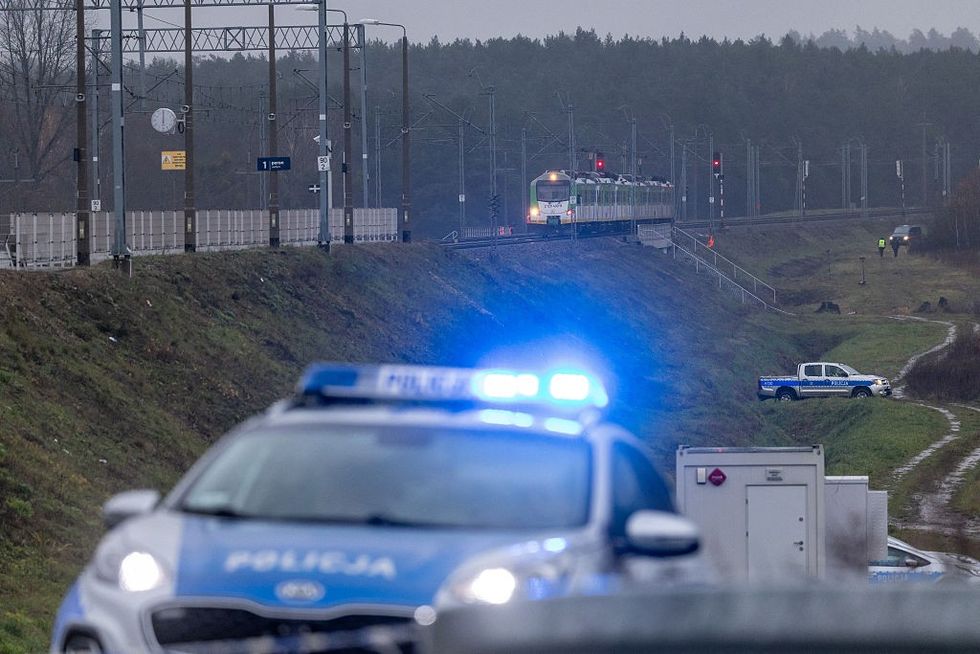
Police cars are seen on November 17, 2025 close to the railways that were damaged in an explosion on the rail line in Mika, next to Garwolin, central Poland, after the line presumably was targeted in a sabotage act. (Photo by Wojtek Radwanski/AFP via Getty Images)
Europe Wakes Up to the “Gray-Zone” War
2025 was the year when Europe formally recognized – and began to respond to – a growing threat from the east: the so-called “gray-zone” war attributed to Moscow.
These attacks mushroomed in 2025 – from cyberattacks to railway bombings, the cutting of undersea cables to drone incursions into Poland and the Baltic states, and more. Experts said they were designed to be difficult to trace, and non-kinetic, so as not to draw a military response; as The Cipher Brief reported, the Kremlin was likely “aiming to create disruption without triggering escalation.”
But there were also signs that European leaders were waking up to the gravity of the threat.
NATO’s Secretary General Mark Rutte warned repeatedly of the dangers, and the alliance moved to improve detection and deterrence measures.
Nations took steps of their own. Finland acquired hundreds of drone jammers and outfitted border forces with high-end drone detectors; leaders from Poland, the Czech Republic and the Baltic states said they might shoot down Russian aircraft if Moscow continued its provocations; in a September speech to the United Nations, Polish Foreign Minister Radoslaw Sikorski went so far as to warn Moscow that “if another missile or aircraft enters our space without permission, deliberately or by mistake, and gets shot down and the wreckage falls on NATO territory, please don’t come here to whine about it.”
Even nations far from the Russian frontier were waking up to the dangers; Ireland unveiled a €1.7 billion, five-year defense plan that included systems to counter drones and protect undersea cables from Russian sabotage. And in her first public speech, MI6 chief Blaise Metreweli described the gray-zone threat bluntly: “The new frontline is everywhere,” she said.
Writing in The Cipher Brief, former Senior CIA Executive Dave Pitts stressed the need “to change the risk calculation.”
“We need to think of deterrence and response as a team sport – an Article 5 mindset,” Pitts wrote. “Gray-zone attacks that go unanswered reward our adversaries and reinforce the idea that there are more gains than risk…and encourage more attacks.”
Sign up for the Cyber Initiatives Group Sunday newsletter, delivering expert-level insights on the cyber and tech stories of the day – directly to your inbox. Sign up for the CIG newsletter today.

Heavy trucks haul earth and rock at the construction site of Wubian Xiangshang Reservoir on the top of Pandao Mountain in Zhangye, China, on March 3, 2025. (Photo by Costfoto/NurPhoto via Getty Images)
America’s Rare Earth Crisis
Not long ago, rare earth minerals rarely made global headlines. 2025 was the year when that changed. And for the U.S. government, it was also the year in which rare earths took center stage.
Two basic facts underscored the urgency: rare earths are essential building blocks for everything from smart phones to home appliances to cars to all manner of military equipment and weapon systems; and China now produces an estimated 60 percent of the world’s rare earths and processes nearly 90 percent of them. The U.S. Geological Survey said that in 2024, the U.S. imported more than 95 percent of the total rare earths that it consumed.
Those realities spurred multiple U.S. efforts to change the dynamic: deals with Australia and Japan; negotiations with other resource-rich countries, including Congo, Indonesia, Kazakhstan and Malaysia; and threats to annex mineral-rich Greenland. Even the negotiations with Russia and Ukraine reportedly included plans for U.S. firms to invest in rare-earth extraction in Russia.
China’s imposition of rare-earth export restrictions only heightened the concerns – and while those were lifted as part of a deal with Washington, the message was clear: China’s rare-earths dominance now poses a huge problem for the U.S., and gives China a powerful lever in any future negotiations with Washington.
Susan Miller, a Former Assistant Director of the CIA’s China Mission Center, called the rare earth access “vital” to U.S. technology and national security.
“We democracies must do more to assure we have continuous access to these metals, and we also need to start producing more,” Miller told The Cipher Brief. “All democracies must focus on this issue; we must act now.”
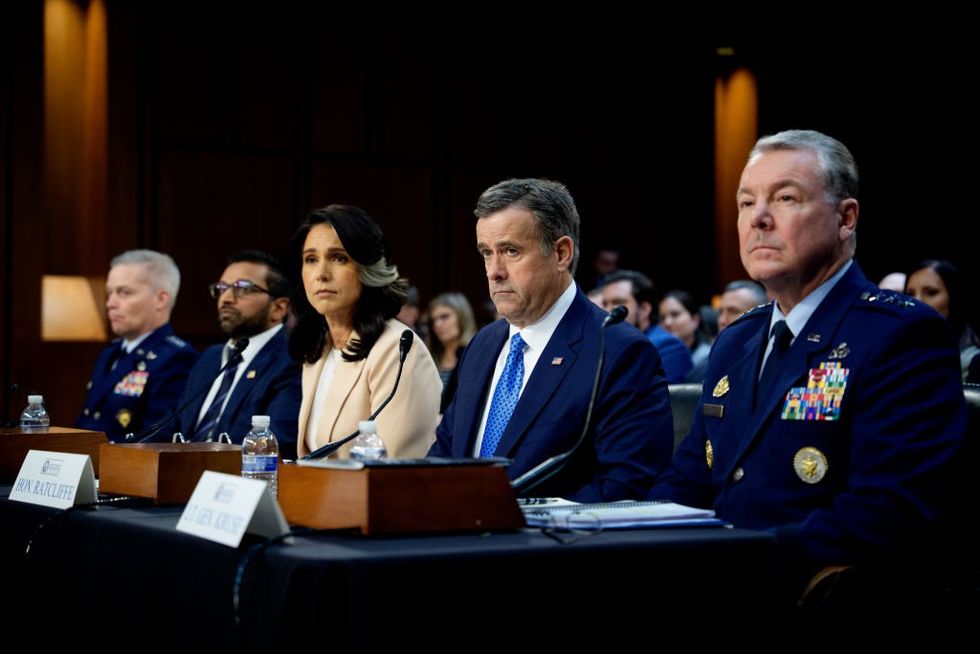
Then-National Security Agency Director General Timothy Haugh, FBI Director Kash Patel, Director of National Intelligence Tulsi Gabbard, Central Intelligence Agency Director John Ratcliffe, and then-Defense Intelligence Agency Director Jeffrey Kruse appear during a Senate Committee on Intelligence Hearing on March 25, 2025 in Washington, DC. (Photo by Andrew Harnik/Getty Images)
The Overhaul of the Intelligence Community
Before his return to the White House, Donald Trump promised to remake the U.S. intelligence community (IC). “We will clean out all of the corrupt actors in our national security and intelligence apparatus,” Trump said soon after the 2024 election.“The departments and agencies that have been weaponized will be completely overhauled.”
In 2025, it was a promise he kept.
There were widespread cuts in staffing at the CIA, FBI, and the Cybersecurity and Infrastructure Security Agency (CISA), and the biggest reductions appeared to come at the Office of the Director of National Intelligence (ODNI), which coordinates the 18 agencies of the IC. Roughly 40% of ODNI staff were cut, including the elimination or consolidation of the Foreign Malign Influence Center and some cyber threat units into other agencies.
Other high-level dismissals drew particular attention: National Intelligence Council acting head Mike Collins was fired after presenting an assessment on Venezuela that contradicted the White House line; and NSA Director Gen. Timothy Haugh lost his job after Trump “influencer” Laura Loomer questioned his loyalty to the administration.
Depending who you asked, the changes were a much-needed streamlining of a bloated intelligence apparatus; a reorganization to focus less on Russia and China and more on border security and drug trafficking; or a Trump-driven retaliation against institutions and individuals he had blamed for investigations or views with which he disagreed.
The high-level firings troubled several experts. Jon Darby, a longtime NSA veteran who served as director of operations, told The Cipher Brief he was “very disheartened” by Gen. Haugh’s ouster. “We need an explanation of the underlying rationale,” he said.
Beth Sanner, a Cipher Brief expert who served as Deputy Director for National Intelligence at ODNI, warned of a broader politicization of the IC.
“The intelligence community is not like asking people to hit the easy button and the ‘I agree with you’ button,” she said. “That’s not our role. Our role is to say what we think and why we think it…The intelligence community isn’t always right. But when done correctly and behind closed doors, I cannot understand why anybody would say that presenting an intelligence assessment that disagreed with policy needed to stop, or was an example of deep state. It’s not. And it’s really important.”
All that said, the nature of the IC makes it difficult, even at the end of a tumultuous year for the various agencies, to know precisely what the impact of the “overhaul” has been – or will be in the future.

Fingers on laptop. (Photo by Silas Stein/picture alliance via Getty Images)
A Cybersecurity “Watershed”
It seemed like a headline from a science fiction journal. An artificial intelligence system had conducted a large-scale espionage operation.
But it wasn’t science fiction – or fake news. The AI giant Anthropic confirmed the first real-world case of the use of an AI system to do exactly that.
“Today marks a watershed in cybersecurity,” Jennifer Ewbank, a former Deputy Director of the Central Intelligence Agency for Digital Innovation, told The Cipher Brief. “AI has now crossed from tool to operator,” Ewbank said, “blurring the line between human intent and machine execution…a threshold has been crossed.”
Anthropic said that Chinese state-sponsored hackers had exploited its Claude AI system to carry out cyberattacks on corporations and foreign governments in September, and that the hackers had succeeded with only minimal human oversight. Anthropic’s threat intelligence chief said the campaign had targeted about 30 entities, and represented a new level of AI-enabled hacking. The hackers posed as security auditors and successfully breached several systems, accessing privileged accounts and private data before being blocked.
The good news? The number of breaches and scale of the damage appeared small, and no U.S. government agencies were compromised. But the incident gave ammunition to doomsayers who have warned of AI nightmares – and showed that AI is already a valuable tool for hackers and state-backed cyber operations.
Experts called it the latest code-red warning for securing AI systems and deploying effective cyber defenses. As Ewbank put it, “This is no longer a hypothetical threat being researched in a lab.”
Read more expert-driven national security insights, perspective and analysis in The Cipher Brief.